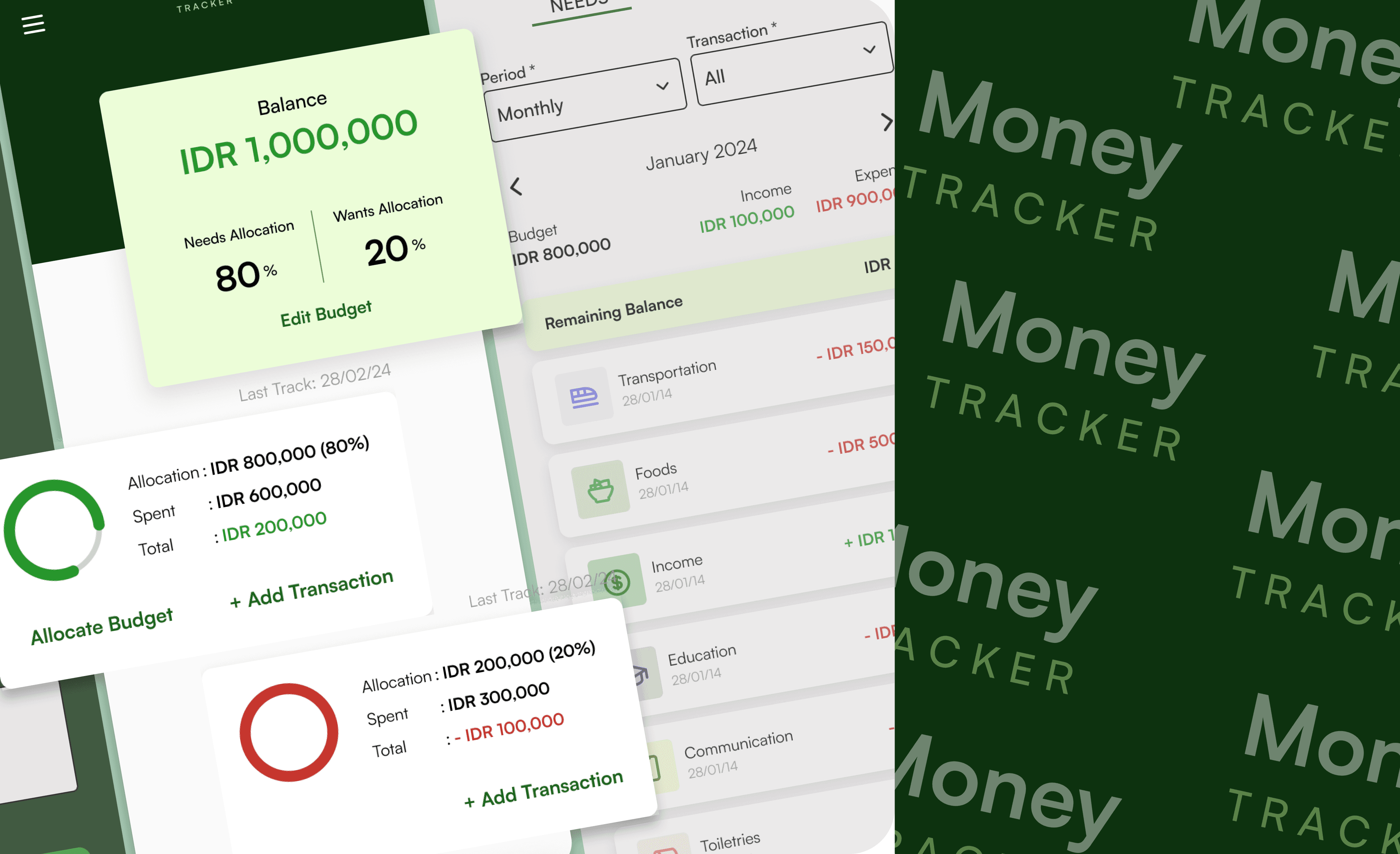
Money Tracker
Money Tracker is a user-friendly budgeting app designed to help individuals gain control of their finances. It allows users to allocate budgets for needs and wants, customize spending categories, and track transactions. With features like a dashboard for real-time adjustments, expense reports by day/week/month, and reminders to log transactions, users can make informed financial decisions.
Financial management struggles
- Economic conditions are mediocre/mediocre to low
- Difficult to prioritize needs and wants
- Difficult to manage finances
- Didn't consistent in managing finances when they have started to managing finances
- Don't have special strategy to manage finances
- There are no tools that can help them strategize and be consistent
- No control over the maximum spending for each need
- No reminder per day/week to track expenses
UI/UX Designer
As UI/UX Designer, my main responsibilities are:
- Conducting in-depth user research included in-depth interview
- Defining user needs
- Creating the UX process from affinity diagram, persona, empathy map, journey, until ideate our solutions based on user problems
- Creating the sketch, wireframe, design system, and high-fidelity design, until the prototyping
- Conducting usability testing to validate our design and ensure our design is already easy to use by the users
- Iterate the design based on feedback from Usability Testing
Research methodology
Before we conduct the In-Depth Interview, we conceptualize research objectives to determine the purpose of conducting research, and we create research questions that will later be asked to the user.
💟 Research Methods
1. Primary Research
- In-depth Interview
- Usability Testing
- System Usability Scale
2. Secondary Research
- Self-Application Evaluation
- Competitive Analysis
💟 Interviewees
I interviewed 2 users — both are overseas students who are very relatable to the case study. We asked about the pain points and problems experienced by the user and other questions such as user needs, gains, and behavior.
Gathering Insights
Here are the results of the interviews.
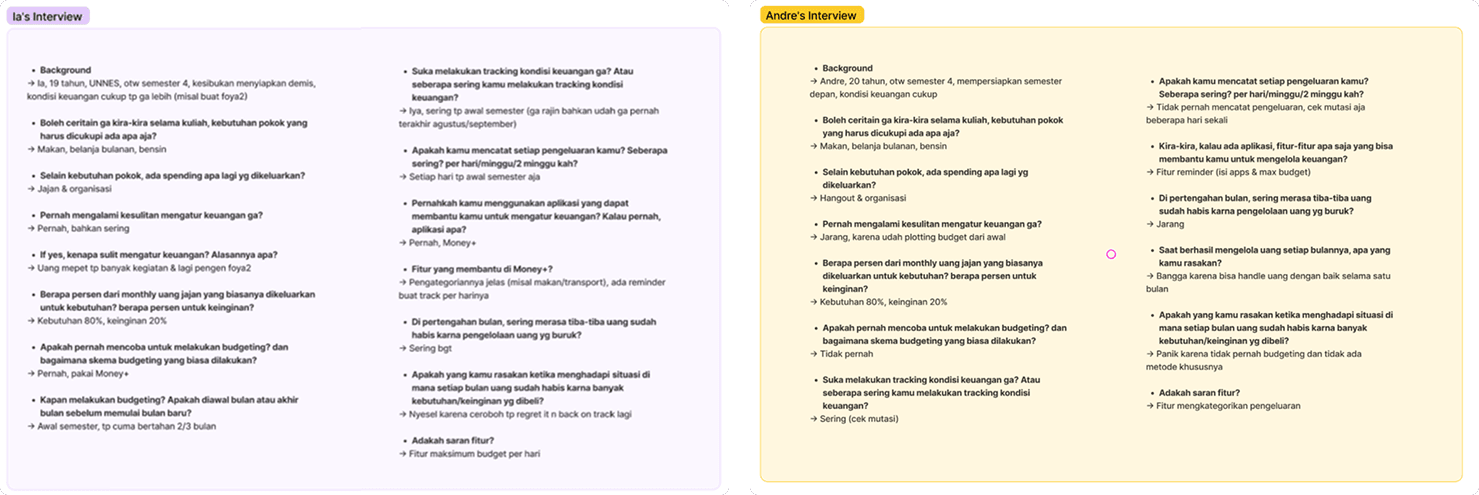
From the results of the information we got from users, we found several highlights/main points. The recap of pain points from the users are:
📈 Financial Awareness and Tracking
Both respondents, Ia and Andre, are in the process of balancing their finances as they prepare for the upcoming semester.
💸 Budgeting Experience
Ia has attempted budgeting before, focusing on controlling her spending by using ratios (e.g., 80% for needs, 20% for wants). Andre has also tried budgeting but rarely updates it. Both have experienced difficulties managing money mid-month, especially when expenses become unexpectedly high.
🤯 Common Challenges
Both struggle with maintaining consistent control over their budgets, particularly as expenses rise or when unexpected costs appear mid-month. They often feel anxious when their budgeting efforts seem to fail, particularly when they lose track of their spending.
✨ Suggestions for Improvement
Ia suggests adding more personalized features to financial apps, such as reminders and a clearer interface for monitoring progress. Andre expresses interest in apps that could categorize expenses more effectively, which might help improve his budgeting habits.
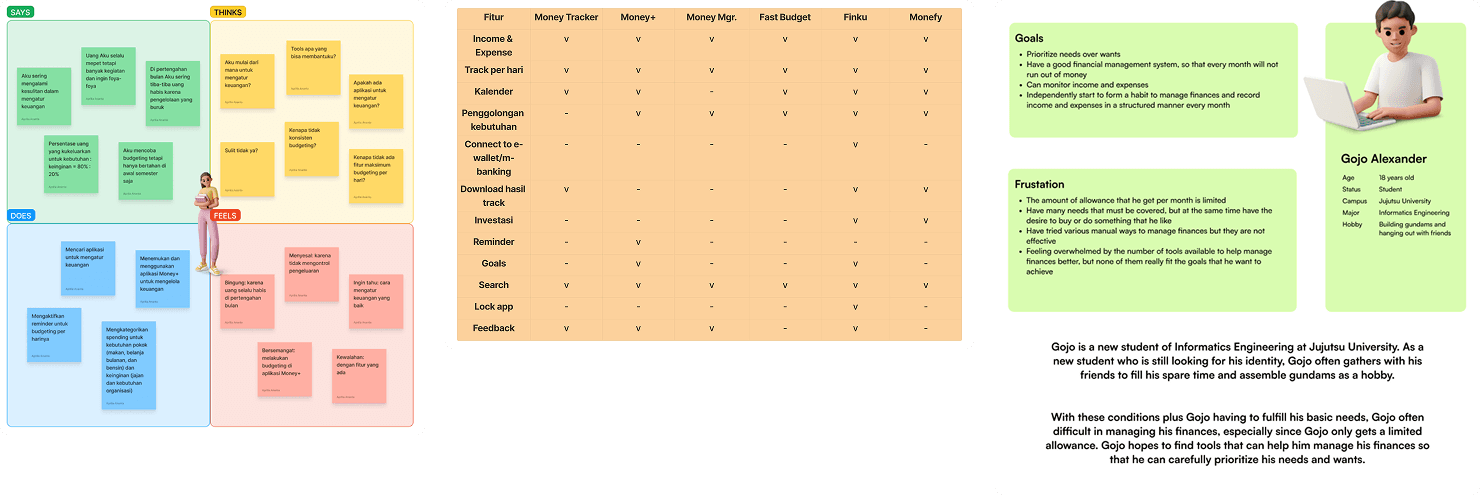
Until this process, we have created the empathy maps, persona and competitor.
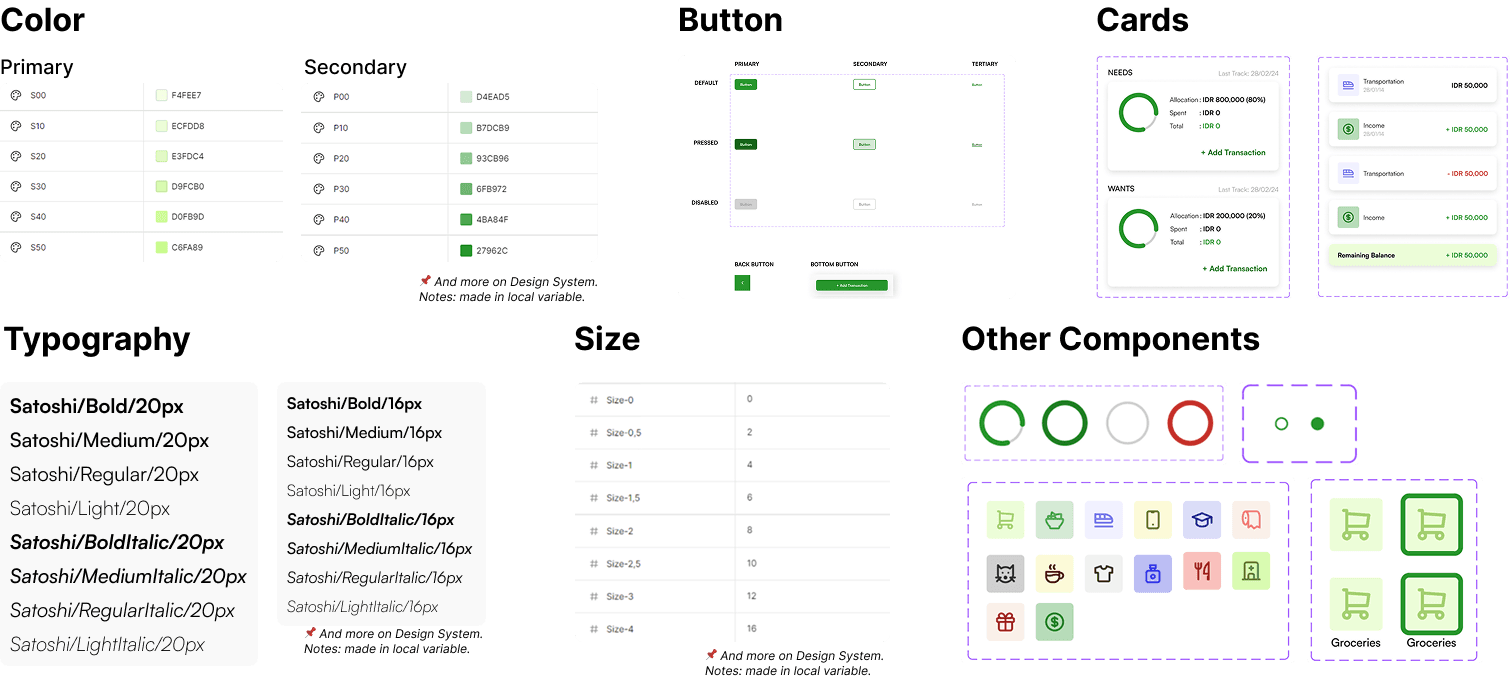
Consistency and efficiency
A design system needed for product design and development purposes to eliminate inconsistencies, speed up the final design process to reduce cognitive load.
Low-fidelity layout
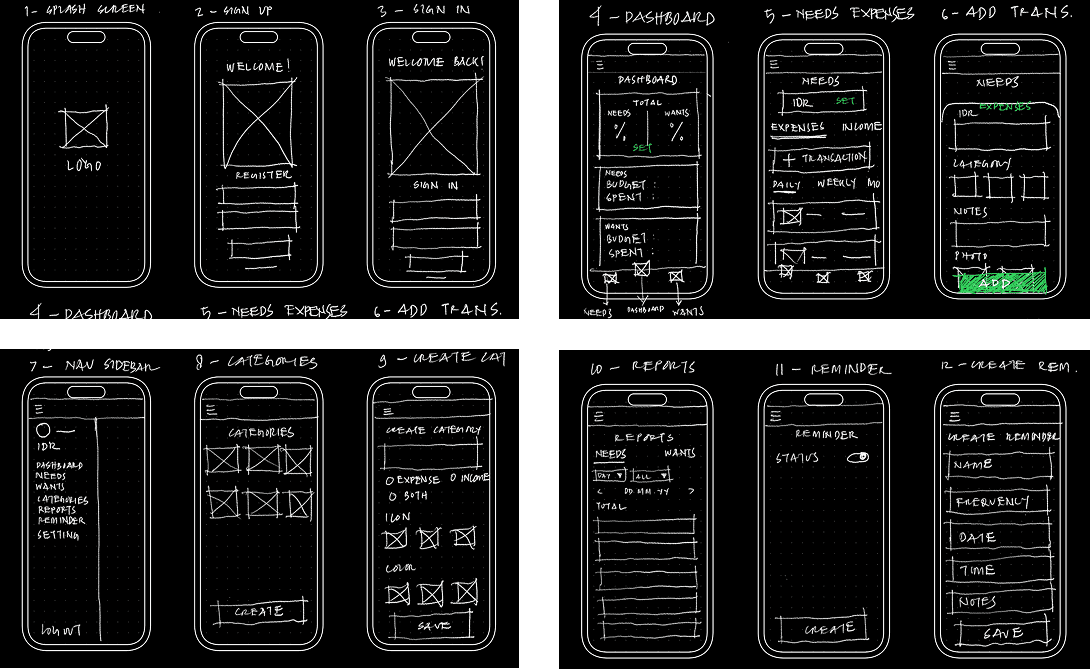
The next step that we do is create the wireframe and implement the layout with low fidelity style. Our main focus in the wireframe is determining the layout of the design along with copywriting.
High-fidelity prototype
From the user insights, we can now move forward to creating a high-fidelity prototype focused on improving financial tracking.
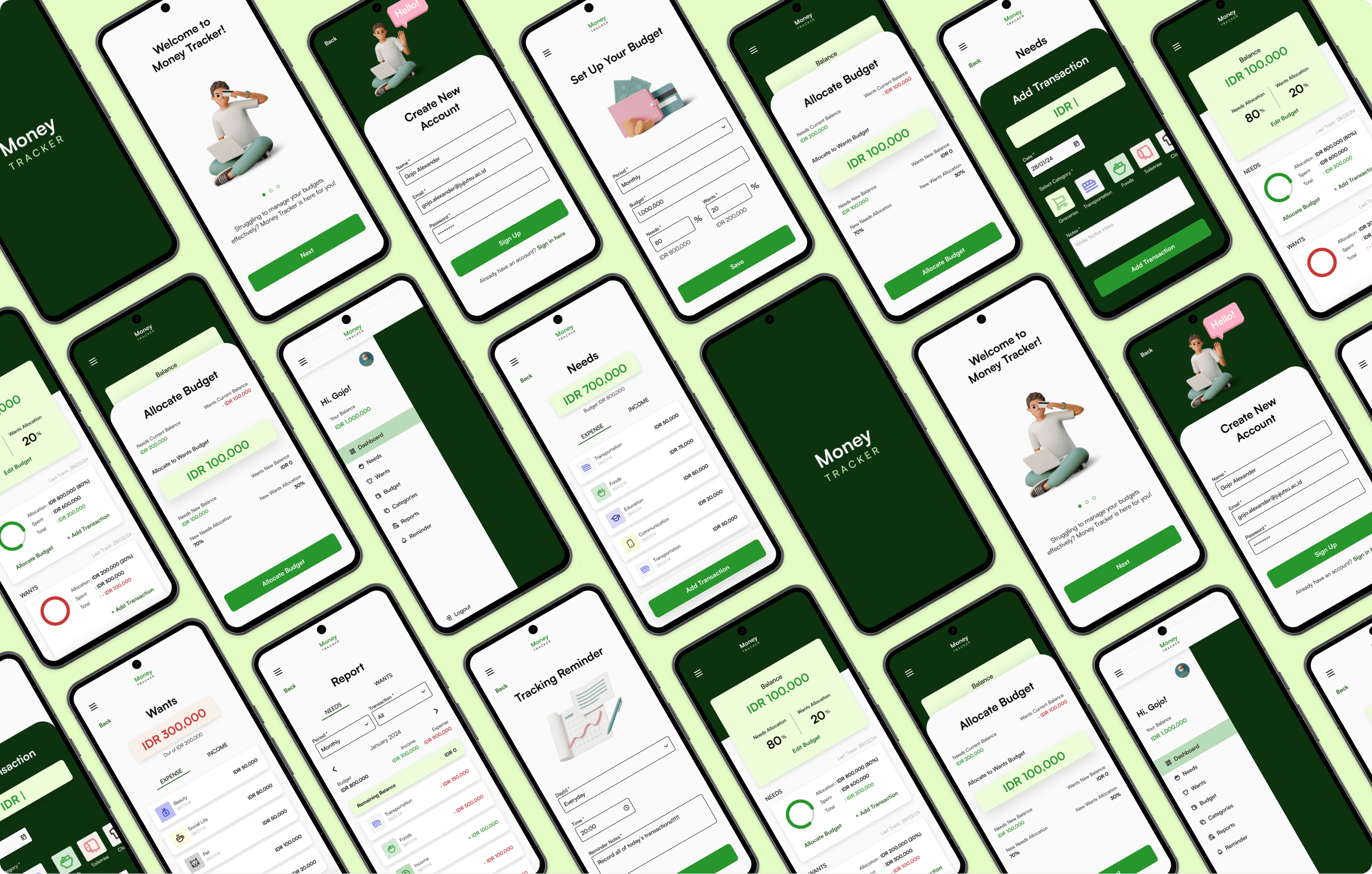
 Scan for full prototype
Impact on the Project
Working on this case study provided a deeper understanding of how real users struggle with financial management and how to design solutions that address their pain points. It enhanced my ability to identify key user problems and translate those into actionable features for the project. This case study has laid a strong foundation for creating a practical, user-centered financial tracking app that is both intuitive and effective in addressing user's needs.