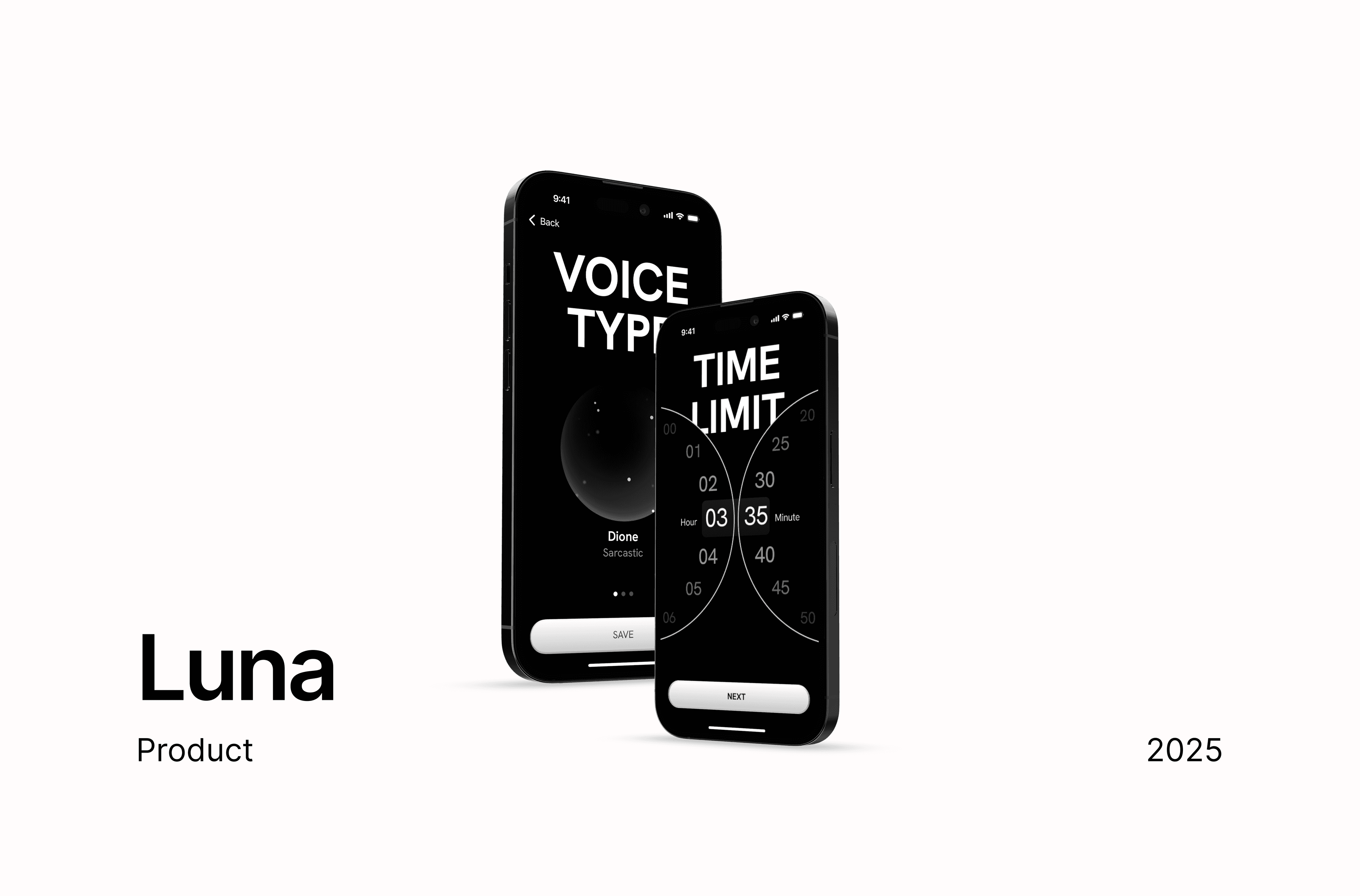
Luna
Luna is an iOS application designed to help users cultivate a healthier, more intentional relationship with their digital devices. By shifting the focus from rigid, easy-to-ignore restrictions to mindful awareness, Luna empowers individuals to reclaim their time and remain present in their daily lives.
Many users struggle with "doom-scrolling"
Many users struggle with "doom-scrolling" and find that traditional screen time tools are either too easy to bypass or frustratingly restrictive. There is a significant gap between the desire to reduce screen time and actual behavior change, as most existing solutions fail to address the psychological triggers that lead to mindless device usage.
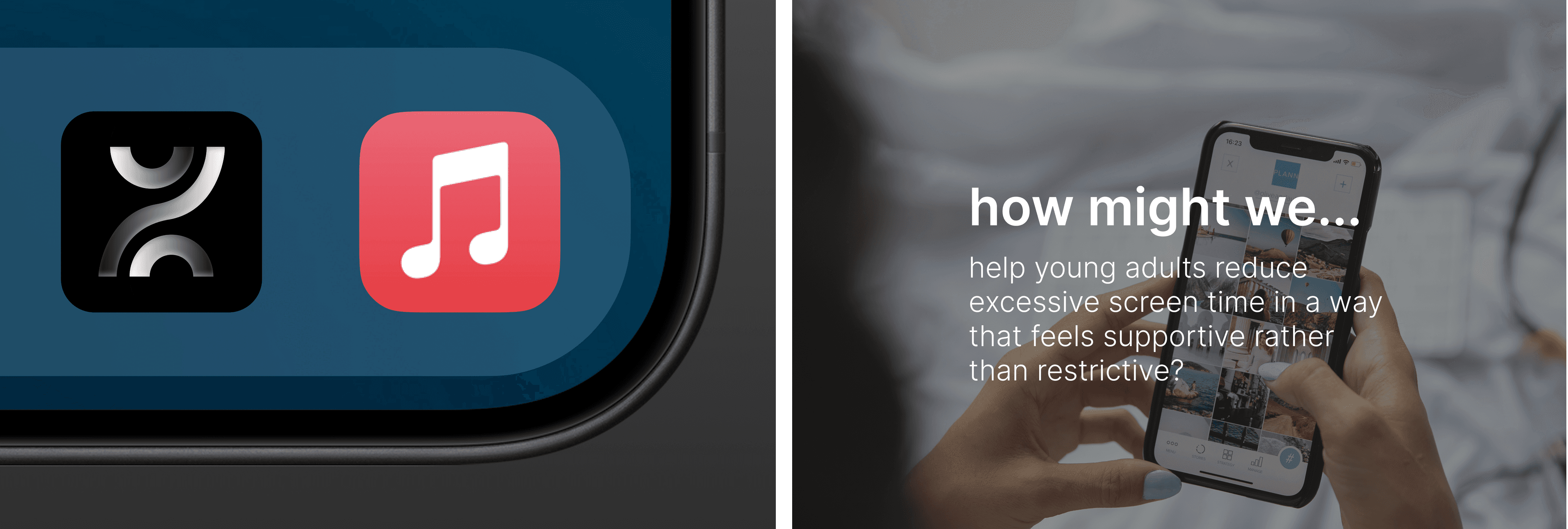
Lead Designer
As the Lead Designer, I headed the end-to-end design process, from initial user research and problem definition to high-fidelity prototyping and the final App Store launch. I collaborated closely with a multidisciplinary team to ensure technical feasibility while managing the project within a structured development cycle.
From discovery to test and iterate
Research & Discovery
We began by analyzing the existing landscape of screen time management and digital wellness apps. We conducted a "Pros and Cons" analysis of current market solutions to identify why they often failed to sustain long term habit changes. I also facilitated empathy mapping sessions to understand the emotional triggers that lead to mindless scrolling, focusing on the specific moment a user realizes they have spent too much time on an app.
Define & Synthesize
Using the data from our discovery phase, we identified that the core issue was not a lack of tracking tools, but a lack of conscious choice. We mapped out the typical user journey of "the scroll," identifying specific intervention points where a nudge could break the cycle of habit. I worked to ensure our problem statement remained focused on user empowerment and regaining agency rather than simple restriction.
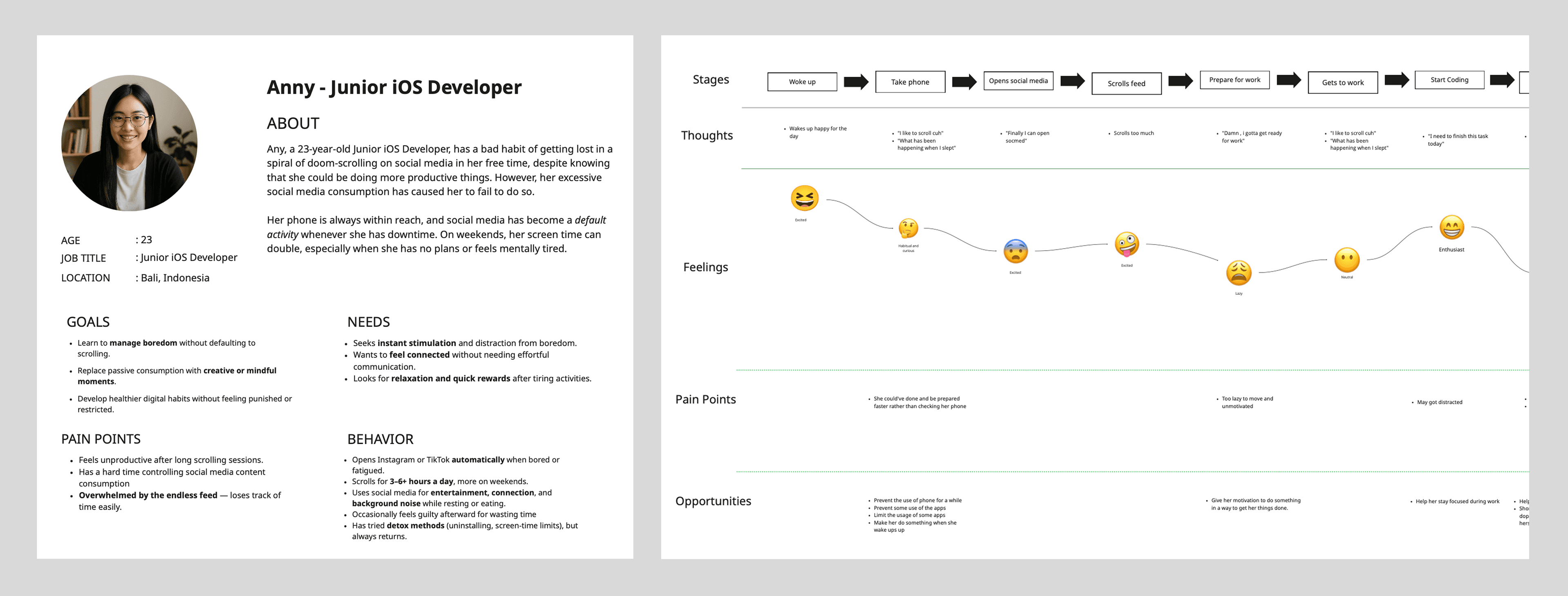
User Persona & Experience Map
Ideate
I led the team through a Lotus Blossom brainstorming session to explore creative ways to introduce "mindful friction". We generated ideas ranging from breathing exercises to haptic alerts and sensory pauses. We eventually converged on a concept that used celestial themed metaphors to represent time and presence, which felt more calm and less clinical than traditional timers.
Prototype & Competitive Analysis
Before finalizing the UI, I analyzed standard iOS Screen Time prompts to understand why users instinctively bypass them. This shaped our design direction. We moved away from "ignore for 15 minutes" buttons and toward interaction models that required a moment of calm reflection. I built high-fidelity prototypes in Figma to test the pacing and visual hierarchy of these new intervention screens.
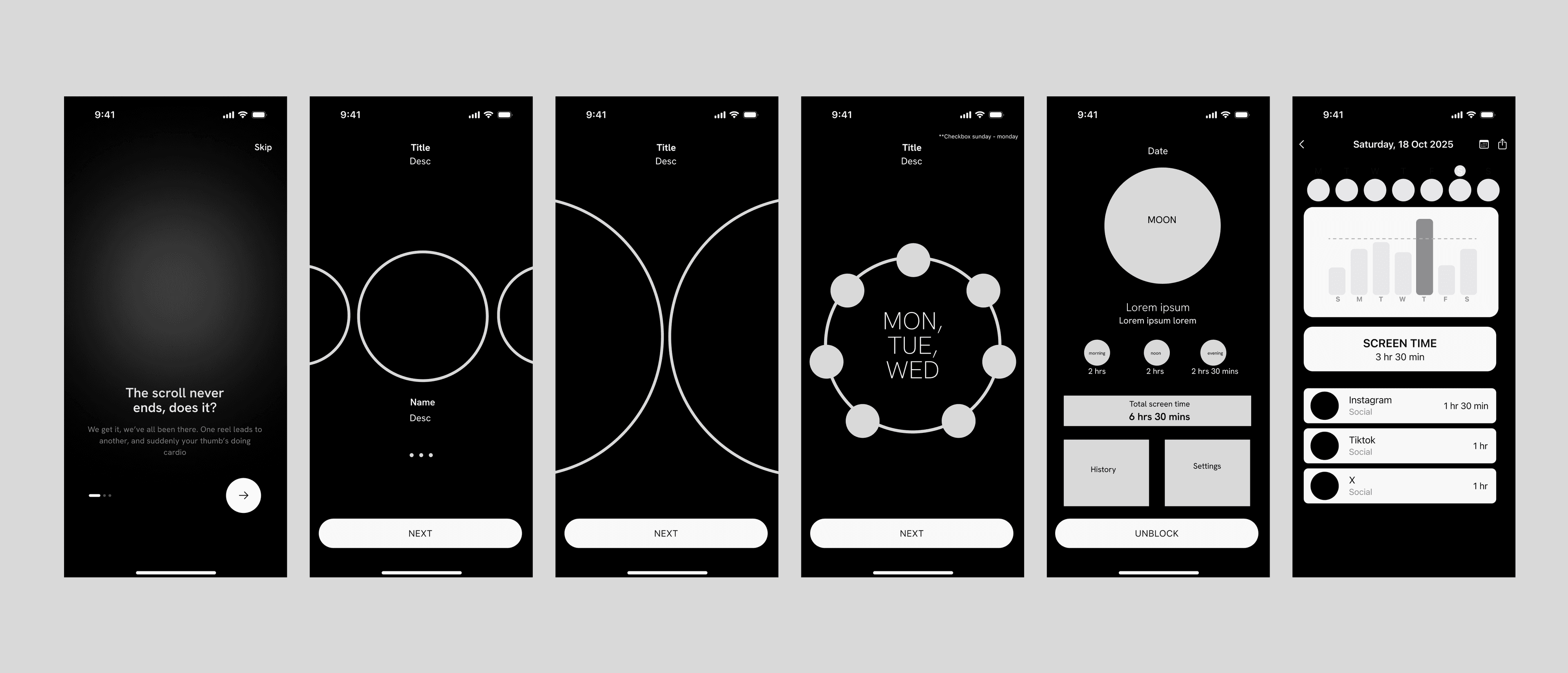
Low-Fidelity Wireframes
Test & Iterate
We gathered feedback on the prototype to ensure the friction we added didn't become a source of annoyance. Iterations focused on simplifying the dashboard and ensuring the visual language felt serene. I refined the screen hierarchy to prioritize immediate awareness of time spent without triggering anxiety or guilt, ensuring the user felt in control throughout the experience.
The reasoning behind critical choices
Implementation of Mindful Friction
Instead of hard-locking apps, we designed a system where users must pause and engage in a brief reflection before accessing a distracting app. This decision was based on our research into habit loops. By breaking the automatic "tap and scroll" sequence, we give the user back their agency. The design requires a conscious interaction, ensuring the user is making an intentional choice to use their phone.
Celestial Themed Visual Language
I chose a "Luna" or moon themed aesthetic with soft gradients and dark modes to create a calming digital environment. This was a strategic departure from the bright, high energy colors often used in social media apps. The goal was to make the app feel like a "safe harbor" from digital noise, encouraging a winding down mindset and reducing the stress associated with high device usage.
Non-Judgmental Data Visualization
We moved away from the red "danger" bars commonly seen in tracking apps. Instead, we used minimalist progress indicators that focus on time reclaimed and mindful sessions completed. This shifts the emotional focus from "what I did wrong" to "what I am doing right," which our testing showed was more effective for long term engagement and positive reinforcement.
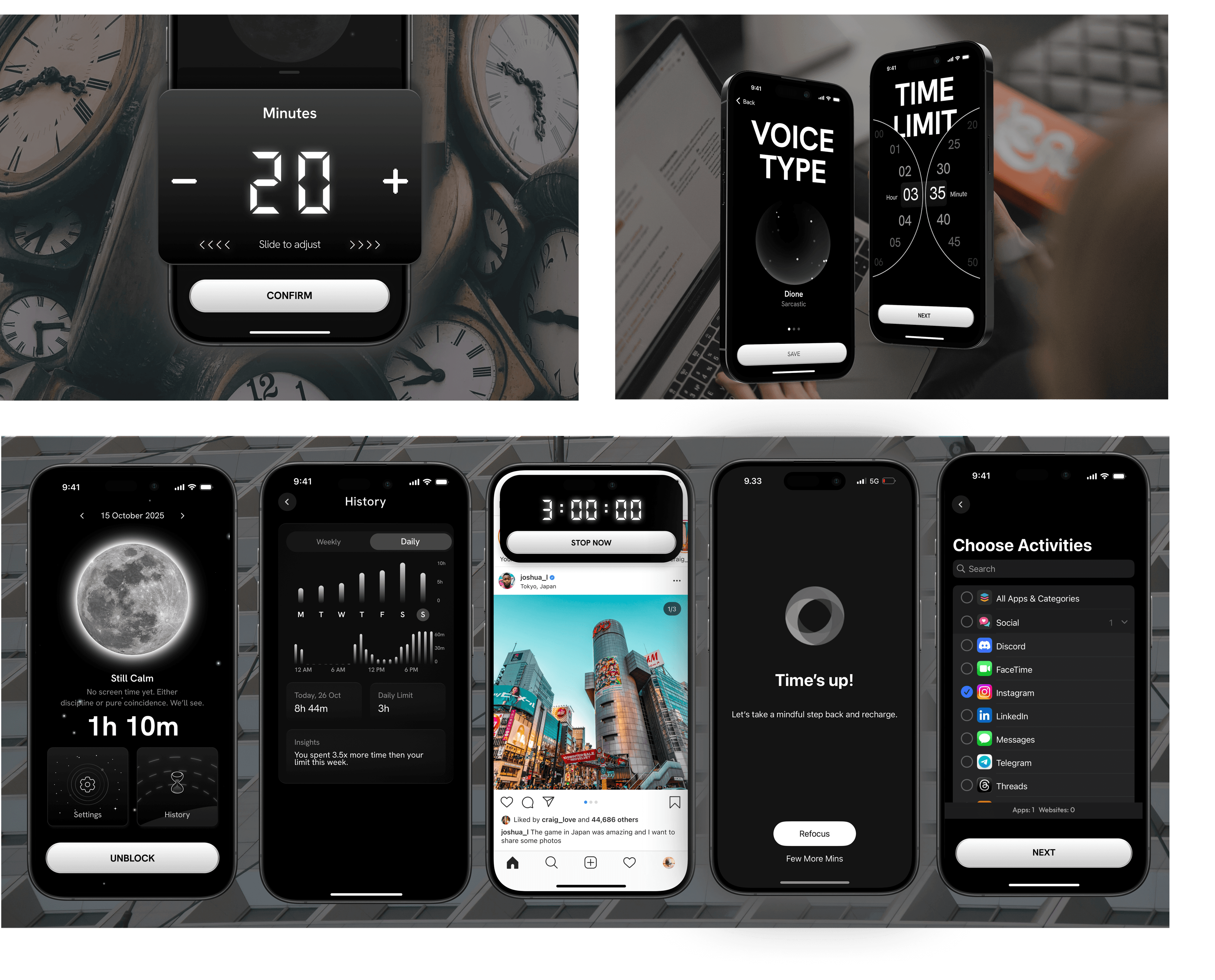
High-Fidelity Screens
Available on the App Store
The final deliverable was Luna, a high-fidelity mobile application now available on the App Store. The app provides a seamless flow for monitoring usage and implementing mindful interventions. It successfully validated the concept that "gentle friction" can be a powerful tool for behavioral change. While this started as a project at the Apple Developer Academy, it has evolved into a polished tool that helps users live more intentionally in a digital first world.
What I Learned
This project taught me the importance of designing for psychological outcomes rather than just functional ones. I learned that sometimes the best user experience is one that purposefully slows the user down. Most importantly, this experience sharpened my ability to lead a design vision from a raw idea to a published product on the App Store. This project demonstrated that thoughtful design can help solve complex behavioral challenges like digital addiction.