Foodledge
Foodledge is a mobile fitness companion designed to help gym newcomers navigate the overwhelming early stages of building a consistent workout routine. The app addresses the unique friction points beginners face, from not knowing how to use equipment to struggling to track nutrition and progress, by bringing structure, motivation, and clarity into one accessible tool.
Starting a gym routine is quietly overwhelming
Starting a gym routine sounds simple, but for most newcomers it's quietly overwhelming. Through our research, we found that beginners don't just lack knowledge. They also lack confidence, structure, and a clear starting point. They feel intimidated by crowded gyms, confused by equipment, unsure whether what they're doing is working, and easily discouraged when they can't track meaningful progress. Existing apps like MyFitnessPal or EatFit added to the frustration: they're feature-heavy, require too many steps to log even basic information, and assume a level of fitness literacy that beginners simply don't have yet.
Lead Designer
I served as Lead Designer on a four-person team over 19 days as part of a structured design challenge. I owned the end-to-end design process, from shaping our research approach to delivering the final high-fidelity prototype, while guiding the team's design decisions and ensuring consistency across all outputs. Beyond executing design work myself, I facilitated collaborative sessions, synthesized research findings into actionable direction, and made final calls on key UX decisions including the calorie tracking flow and onboarding logic.
From research to high-fidelity prototype
Research & Discovery
We started by interviewing gym-goers directly, both newcomers and people who had been going for years but still identified with "beginner" feelings. Each team member recruited and interviewed real users from our network. Our questions covered gym frequency, primary goals, emotional experiences, progress tracking habits, and what they wished had existed when they started. Alongside interviews, I ran a short survey to capture patterns at scale, focusing on pain points like overcrowding, lack of structured guidance, and inconsistent tracking habits.
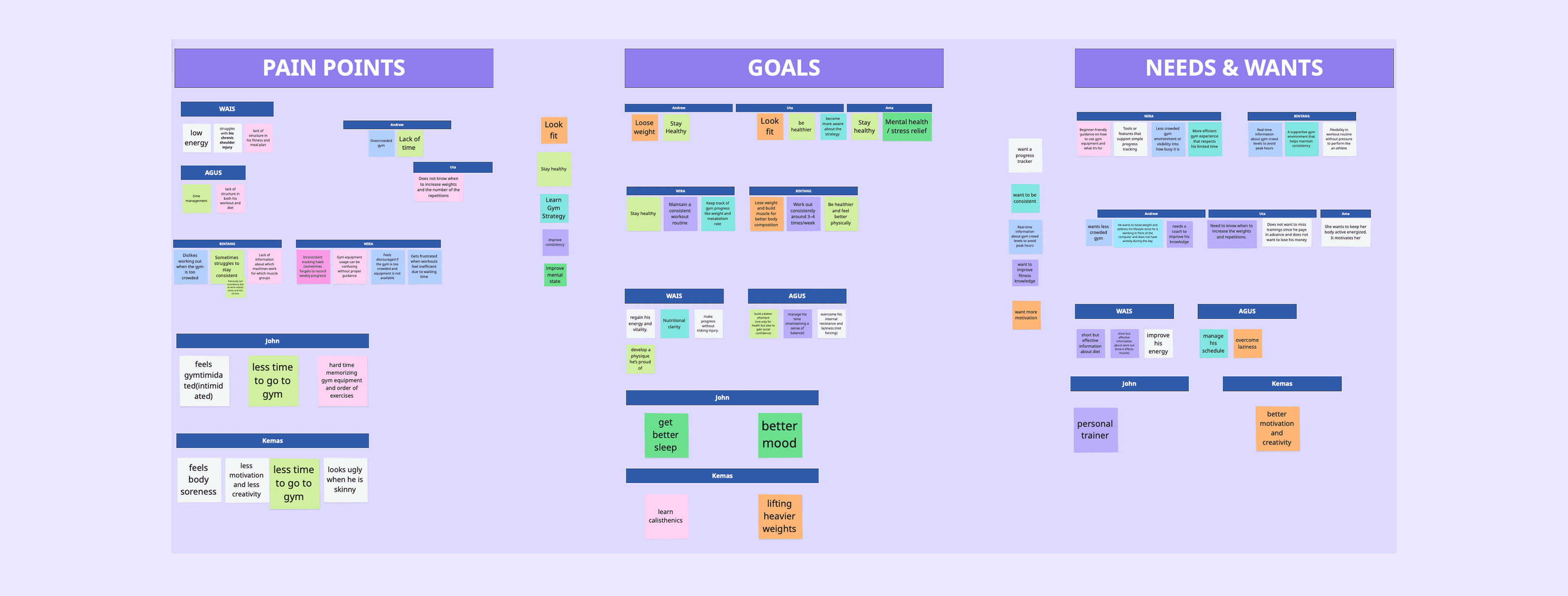
Pain Points, Goals & Needs affinity mapping from user interviews
Define & Synthesize
After interviews, I mapped key findings across users and pulled recurring themes: nearly everyone struggled with knowing when to increase weights, felt uncertain about proper form, and had no reliable system for tracking progress beyond memory or body feel. I organized these insights into a pain point matrix and contributed to building our core user persona, Alex Morgan, a 25-year-old working professional in Bali who wants to lose weight and build consistency, but feels lost and mildly gymtimidated. I also co-built the User Journey Map that tracked Alex's full day from morning routine to post-gym wind-down, identifying every moment of friction and opportunity for our app to intervene.
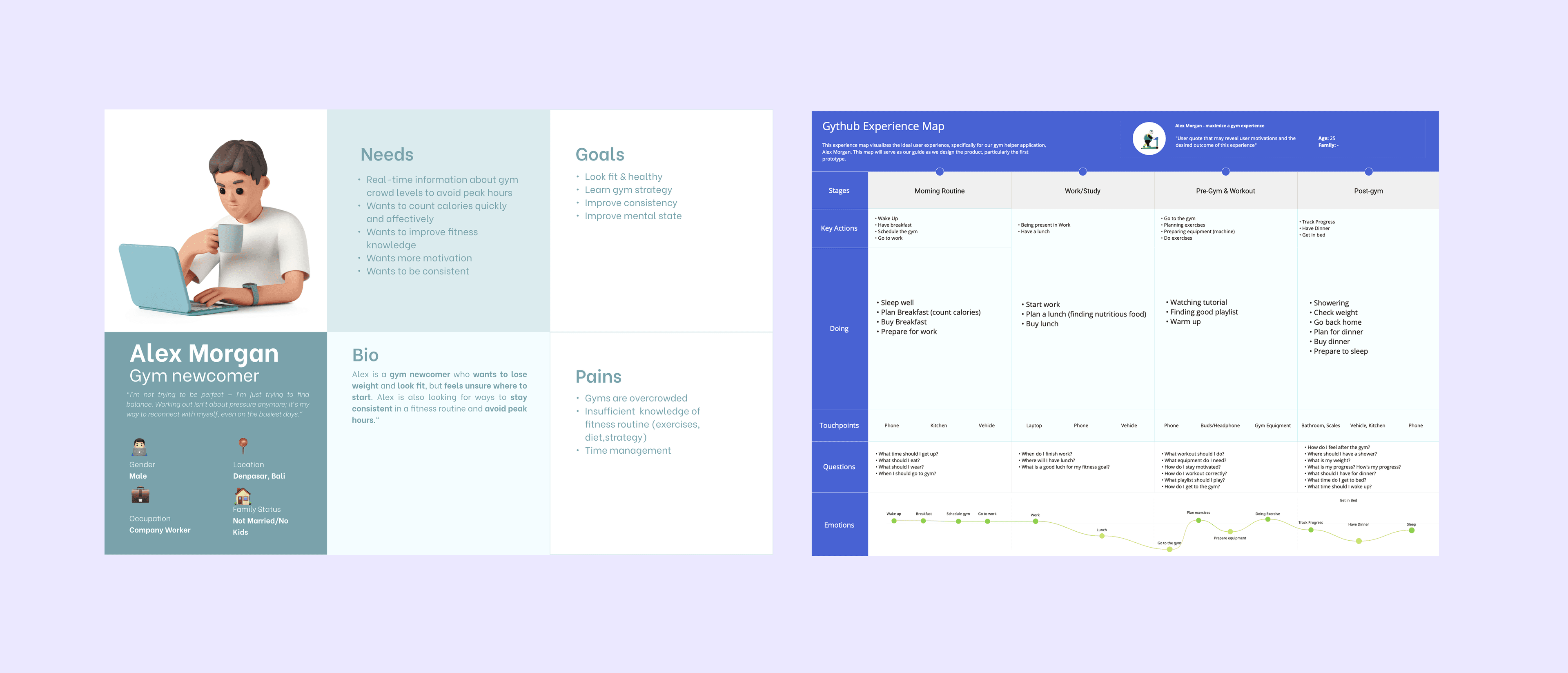
User Persona & Experience Map
Ideate
Using our journey map and persona as anchors, the team ran a structured ideation session on Miro. We generated features organized around the key friction zones: dietary consistency, progress tracking, gym knowledge, and motivation. Ideas ranged from AI-powered calorie scanning to Tamagotchi-style habit tracking companions. After dot-voting and grouping, we converged on a focused solution concept: a low-cognitive-load app centered on quick calorie logging via camera scan, a progress tracker, and smart daily reminders, all designed to reduce mental overhead for someone already juggling work and gym.
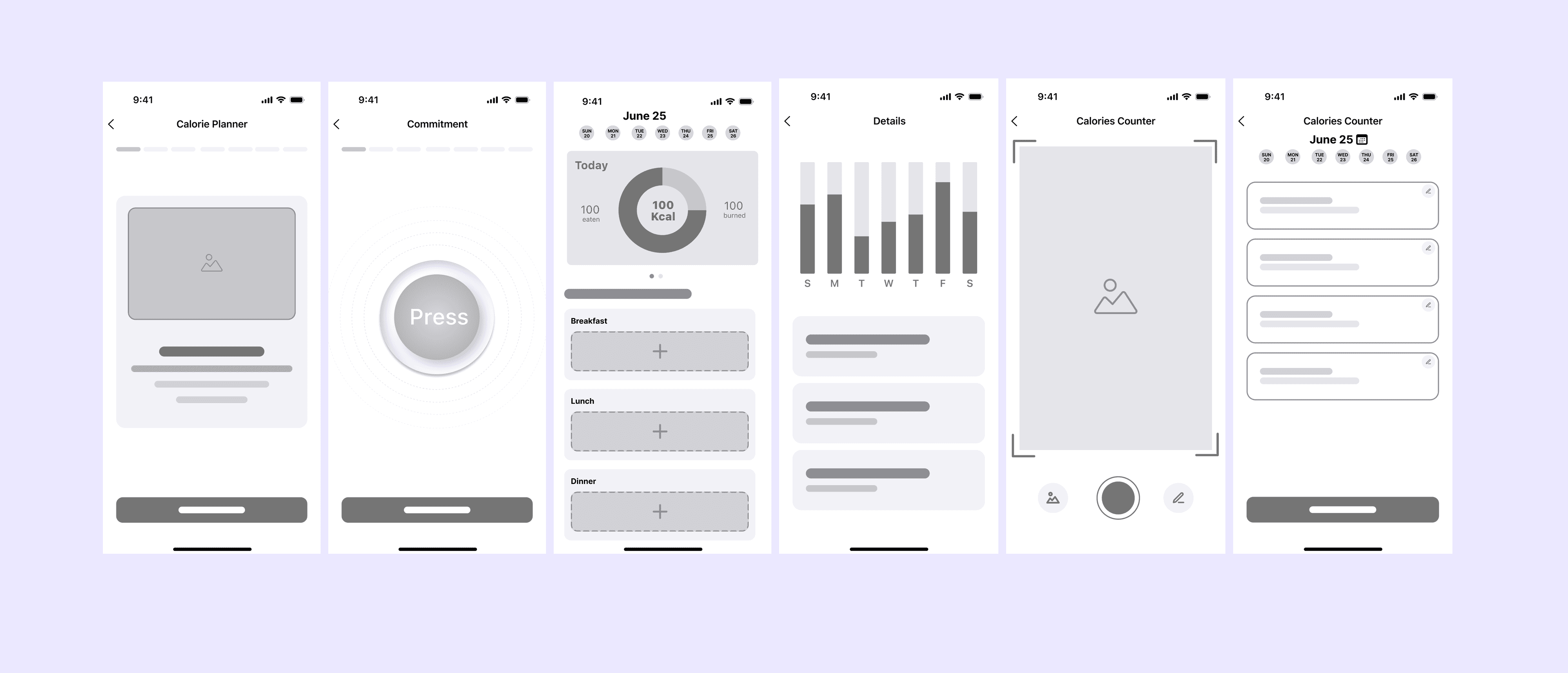
Low-Fidelity Wireframes
Prototype & Competitive Analysis
Before moving into high-fidelity screens, I analyzed two existing apps, EatFit and FatSecret, through a cognitive load lens. I documented that EatFit required a minimum of 8 steps to log a single food item and took an average of 30 seconds per entry, while FatSecret was more minimal but lacked personalization. These findings directly shaped our design direction: we prioritized reducing logging steps to under 5, leading with a camera-first interaction model, and avoiding feature overload on first use. The team then moved into building hi-fi prototypes in Figma, iterating based on mentor feedback and internal user testing.
Test & Iterate
We conducted user testing on our prototype and gathered structured feedback. Mentor critiques highlighted the need to avoid leading questions in research, keep onboarding contextual rather than generic, and ensure the UI didn't overwhelm users unfamiliar with fitness vocabulary. I incorporated this feedback by simplifying screen hierarchy and ensuring first-time flows surfaced only the most essential actions.
The reasoning behind critical choices
Camera-first calorie logging
One of the most consistent research findings was that users found manual food logging tedious and easy to abandon. Rather than building a standard search-and-log flow, we designed a camera-first experience where users could scan food or a nutrition label to instantly capture calorie data. This reduced the number of steps required and lowered the friction of building a daily habit, so users don't need to know the name of the dish or manually input macros. The design was grounded in our cognitive load analysis, which showed that the fewer decisions required per interaction, the more likely users are to return.
Minimal onboarding with progressive disclosure
After observing that EatFit overwhelmed first-time users with a complex setup flow, I pushed for a stripped-down onboarding that collected only the essentials (goal type, current weight, activity level) and revealed additional features over time. The goal was to get the user to their first win, logging a meal or completing a check-in, within their first 60 seconds in the app. This decision was grounded in behavior design principles: early success builds habit loops.
Progress tracker designed around visual motivation
Many of our interviewees said they tracked progress "mentally" or not at all, not because they didn't want to, but because existing tools felt clinical and disconnected from how they actually experienced improvement. We designed a progress tracker that centered on visual comparisons (photo progress, body composition trends) and simple weekly check-ins rather than dense data tables. The design prioritized emotional resonance over analytical completeness, because for a newcomer, feeling like something is working matters more than a perfectly calibrated data set.
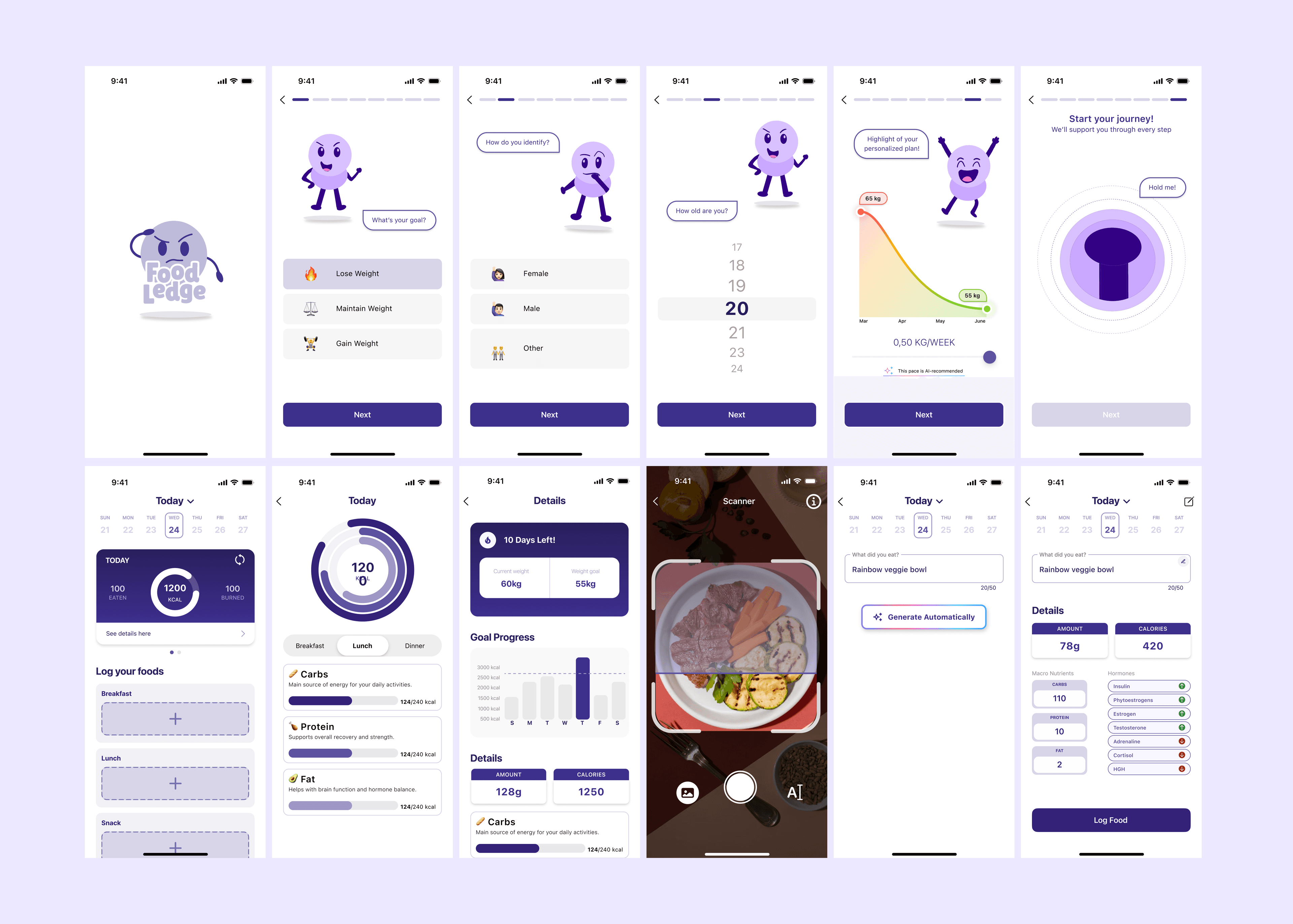
High-Fidelity Screens: onboarding, calorie tracking, scanner and logging flows
A calm, supportive fitness companion
The final deliverable was a high-fidelity interactive prototype covering key flows: onboarding, daily calorie tracking via camera scan, workout logging, and progress check-in. The design used a clean, approachable visual language that avoided the intimidating aesthetic of hardcore fitness brands and steered clear of excessive gamification, with the goal of making the app feel like a calm, supportive tool rather than another thing demanding your attention. The solution concept was validated through user testing sessions, with users responding positively to the camera logging speed and the clarity of the progress overview screen.
What I learned
This project pushed me to hold research and design in tension, resisting the urge to jump to solutions before the problem was genuinely understood. I learned that the most impactful design decisions often come not from clever features, but from removing friction that shouldn't exist in the first place. If I were to revisit this project, I'd invest more time in testing the onboarding flow with actual gym newcomers who have zero fitness app experience, to ensure our assumptions about what felt "intuitive" held up in the real world. Most importantly, this sprint sharpened my ability to synthesize messy qualitative data into focused, actionable design direction.